The suit’s been fitted. The haircut’s booked for the day before. You’ve practised the speech in the car more times than you’d admit. But there’s one thing most grooms don’t think about until they see the photos: their teeth.
You’ll smile in hundreds of pictures, many of them close-ups in bright light. You’ll smile through the vows, the first kiss, the speech and the first dance. Those photos will sit on walls and phones for decades.
If that makes you slightly nervous, you’re not alone. Men are more likely than women to brush only once a day or less, and less likely to see a hygienist. The good news: a confident, natural-looking wedding smile rarely needs anything dramatic. It needs a plan and a bit of lead time. Here’s the plan.
What you’re aiming for
You’re not aiming for a glow-in-the-dark Hollywood smile. Ultra-white teeth can look unnatural in photos, especially next to a white shirt. The goal is a smile that looks like you on a very good day:
- healthy gums, with no redness or bleeding
- clean teeth, free of tea, coffee and tobacco stains
- a natural shade a few tones brighter, not paper-white
- no obvious chips or gaps that bother you
- fresh breath for every close conversation and that first kiss
Most of that comes from good basics and timing, not expensive treatment.
Your wedding smile countdown
Work backwards from the date. The further out you start, the more options you have.
| When | What to do | Why now |
| 12 months or more | Book a check-up and hygiene appointment. Start any teeth straightening. | Decay or gum problems need fixing first. Clear aligners typically take 3 to 12 months, and you’ll want a buffer. |
| 6 months | Finish straightening. Plan whitening and any bonding with your dentist. | Whitening comes after straightening; bonding comes after whitening. |
| 2 to 3 months | Start professional whitening. | Custom trays take a few weeks to make, then whitening itself takes about two weeks. This leaves time for any sensitivity to settle. |
| 4 to 6 weeks | Have composite bonding if you need it. | Bonding is shade-matched to your teeth, so it should follow whitening once the colour has settled. |
| 2 to 4 weeks | Book a hygiene appointment or Airflow stain removal. | Removes fresh surface stains and leaves gums at their healthiest for the photos. |
| Final week | Nothing new. A whitening top-up only if your dentist advises it. | Not the time to try a new treatment and discover you’re sensitive to it. |
| The morning of | Brush, floss and pack a small smile kit. | See the checklist below. |
If you’ve left it later than you’d like, don’t panic. Skip to “Quick wins if the date is close”.
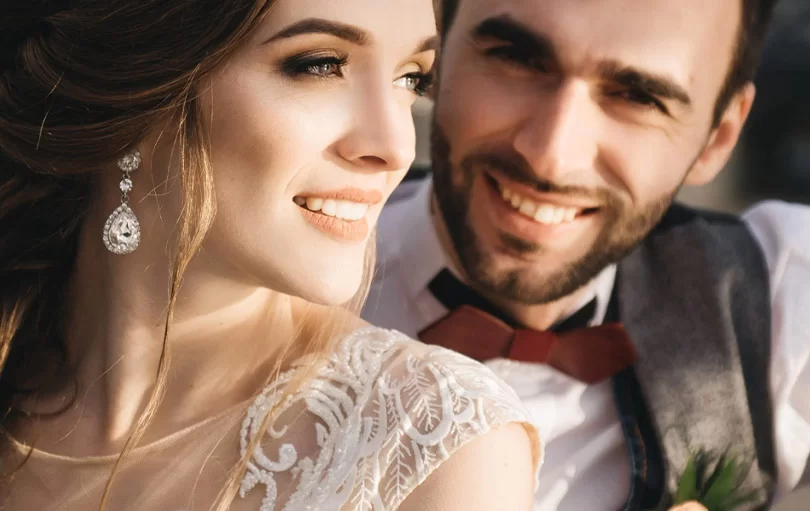
Professional whitening: what you need to know
Whitening is the single biggest upgrade most grooms can make, and it’s simpler than many expect.
How it works
- Assessment. Your dentist checks your teeth and gums first. Any decay or gum disease needs treating before whitening, because the gel can irritate damaged teeth and gums.
- Custom trays. A digital scan of your teeth is used to make thin trays shaped exactly to your teeth. These usually take a few weeks to come back from the lab.
- Whitening at home. You wear the trays with a professional whitening gel, during the day or overnight, for around two weeks.
- Keeping it up. The trays are yours to keep, so you can top up your shade later with a little more gel.
At One Two Three Dental in Guiseley, whitening starts from £236 for one arch and from £398.88 for both, with two main options:
- Bespoke tray whitening: custom trays and professional gel worn over several weeks.
- Enlighten whitening: 14 days of home whitening followed by one in-surgery treatment. After that, wearing your trays for six nights a year maintains the result.
What it feels like
Some temporary sensitivity is common while you’re using the gel, usually a twinge with cold drinks. It normally fades once treatment finishes, which is one more reason to start well before the wedding rather than in the final fortnight.
What it won’t do
Whitening only lightens natural teeth. Crowns, veneers, fillings and dentures won’t change colour. If you have any of these on your front teeth, talk to your dentist first: after whitening they may look darker than the teeth around them, and you may want to replace them to match.
Why not get your teeth whitened at a salon?
It’s tempting. Kiosks and beauty salons often advertise whitening at a fraction of the price. But in the UK, teeth whitening counts as dentistry. It’s only legal when carried out by a registered dentist, or by a dental hygienist, therapist or clinical dental technician working to a dentist’s prescription.
The law also controls the strength of the gel:
| Product | Hydrogen peroxide | Who can provide it |
| Shop-bought strips, toothpastes and kits | Up to 0.1% | Anyone. Freely sold, which is why results are minimal |
| Professional whitening gel | 0.1% to 6% | Only through a dental professional, after an examination, for over-18s |
| Anything stronger | Above 6% | Illegal for cosmetic whitening |
Anyone offering stronger “instant” results outside a dental practice is either using a product too weak to do much, or breaking the law with one that can burn your gums. Neither is what you want two weeks before your wedding.
Straighter teeth in time for the wedding
If crooked or crowded teeth are what make you hold back your smile, clear aligners are the option most grooms ask about. They’re a series of thin, nearly invisible plastic trays, each one moving your teeth a little further, swapped for the next in the series as treatment progresses.
What to know before you commit:
- Timing. Treatment typically takes between 3 and 12 months, depending on how much your teeth need to move. Your dentist can give you a realistic estimate at your consultation.
- Commitment. Aligners only work if you wear them for at least 22 hours a day, taking them out just to eat, drink anything other than water, and brush.
- After treatment. You’ll need to wear a retainer every night to stop your teeth drifting back. That isn’t optional, and it’s worth knowing before you start.
- Cost. At One Two Three Dental, Invisalign starts from £2,295 for one arch and from £3,495 for both, with 0% finance available.
The golden rule: don’t start late. If your wedding is under six months away, talk to your dentist honestly about whether straightening will be finished in time. Being halfway through, or rushing the result, is worse than waiting until after the honeymoon.
Quick wins if the date is close
Only a few weeks to go? You can still make a visible difference.
- Airflow stain removal. A fine jet of air, water and bicarbonate powder lifts surface stains from tea, coffee, red wine and smoking. It takes about 30 minutes, is painless and the difference is visible straight away. It’s safe on crowns, veneers and implants too. At One Two Three it’s from £78 for membership plan patients.
- A hygiene appointment. A professional clean removes tartar and helps settle bleeding gums, which also means fresher breath for the day.
- Composite bonding. A chipped or uneven front tooth can often be repaired with tooth-coloured resin in a single visit, from £265 to £350 per tooth at One Two Three. If you’re also whitening, whiten first so the bonding can be matched to your new shade.
Surviving the stag do with your smile intact
The stag do is a classic danger zone for a pre-wedding smile. A few simple habits help:
- Go easy on red wine and dark drinks if you’ve just whitened. Red wine combines strong pigments with acid, which softens enamel and helps stains stick.
- Alternate with water. It rinses away sugar and acid, keeps your mouth from drying out, and your head will thank you in the morning.
- Don’t brush straight after drinking. Acidic drinks (wine, cider, mixers, energy drinks) temporarily soften enamel. Rinse with water and wait at least 30 minutes before brushing.
- Wear a gum shield for paintball, rugby, boxing or anything where a stray elbow or ball is likely. A knocked-out front tooth is the last thing you want in the wedding photos.
- Don’t open bottles with your teeth. It’s an easy way to chip a front tooth.
If you chip or knock out a tooth
Chipped tooth: keep any broken pieces and call your dentist. Small chips can often be repaired with bonding in a single visit.
Knocked-out adult tooth: this is an emergency. Pick it up by the crown (the white part), not the root. If you can, push it gently back into the socket and bite on a clean cloth to hold it. If you can’t, put it in a cup of milk and get to a dentist straight away. The sooner it’s back in, the better its chances.
Stress, grinding and the final weeks
Wedding planning is stressful, and stress often shows up in the jaw. Many people clench or grind their teeth at night without realising. Signs to watch for:
- a sore or stiff jaw when you wake up
- headaches around the temples in the morning
- teeth that feel sensitive, or look flatter or chipped at the edges
- a partner who mentions grinding noises at night
If that sounds familiar, mention it to your dentist. A custom night guard can protect your teeth, and any recent bonding, from damage while you sleep.
The wedding-morning checklist
On the day itself, keep it simple. Pass this to your best man along with the rings:
- Brush and floss before you get dressed, so there’s no toothpaste on the shirt.
- A travel toothbrush and small toothpaste for after the wedding breakfast and before the evening photos.
- Floss picks or interdental brushes, because herbs and canapés have a way of finding gaps.
- Sugar-free gum or mints for fresh breath before the vows and the first dance.
- A bottle of still water. It keeps your mouth from going dry when nerves kick in and rinses away food and drink between photos.
- Lip balm, because dry, cracked lips show up in close-ups as much as teeth do.
- Hold the coffee and red wine until the main photos are done, especially if you’ve recently whitened.
Bride and groom: plan it together
If your partner is whitening too, it’s worth planning together. A very white smile next to a natural one can look mismatched in close-up photos, so ask your dentist to aim for shades that suit you both. Joint consultations also make it easier to line up timings, and it’s one less thing to organise separately.
Your next step
The grooms who look most relaxed in their photos usually aren’t the ones with the most expensive treatment. They’re the ones who started early, kept it natural and didn’t leave anything to the final week.
If your wedding is coming up and you’re near Guiseley, Yeadon or north Leeds, you can find out more about a wedding smile makeover at One Two Three Dental, including whitening, straightening and bonding options to suit your timeline.
Wedding smile FAQs
How long before the wedding should I whiten my teeth?
Start two to three months before. Custom whitening trays usually take a few weeks to make, the whitening itself takes around two weeks, and that leaves time for any sensitivity to settle and for bonding afterwards if you need it.
Does teeth whitening hurt?
No, though some people notice temporary sensitivity to cold while using the gel. It usually fades once treatment ends. Your dentist can suggest ways to manage it if it bothers you.
Is salon or kiosk whitening safe?
In the UK, whitening is only legal when carried out by registered dental professionals, after an examination. Products sold freely can contain no more than 0.1% hydrogen peroxide, so they have little effect. Anything stronger offered outside a dental practice is illegal and risks damaging your gums.
Can I get straight teeth in six months?
Sometimes. Clear aligner treatment typically takes 3 to 12 months, depending on how much your teeth need to move. If your wedding is less than a year away, get an assessment as soon as possible so you know whether it’s realistic.
What if I chip a tooth the week before the wedding?
Call your dentist straight away. Small chips can often be repaired in a single visit with tooth-coloured composite bonding, so there’s usually still time to fix it before the day.
Will whitening change the colour of my crowns or fillings?
No. Whitening only works on natural teeth. If you have crowns, veneers or white fillings on your front teeth, ask your dentist whether they’ll still match after whitening.